A pair of glasses can look perfect in the store and still become frustrating to wear a few days later. Frames that slide down constantly, feel heavy on your nose, or leave pressure marks usually have less to do with style and more to do with poor fit.
Choosing glasses works differently from choosing clothes or shoes. Your frames affect how clearly you see, how comfortable you feel during long days, and even how thick your lenses appear.
In this guide, you will learn how to select eyeglass frames for your face. We will cover everything from frame fit and face shape to prescriptions, comfort, and lifestyle needs. So, let’s get started.
Quick Summary
The best glasses frames should suit your face shape, prescription, lifestyle, and comfort needs. A good fit keeps lenses aligned properly, reduces headaches, and improves all-day wear. Smaller frames often suit strong prescriptions better, while lightweight materials and professional fitting can make glasses feel more comfortable and natural to wear.
How to Choose the Right Glasses: Important Considerations
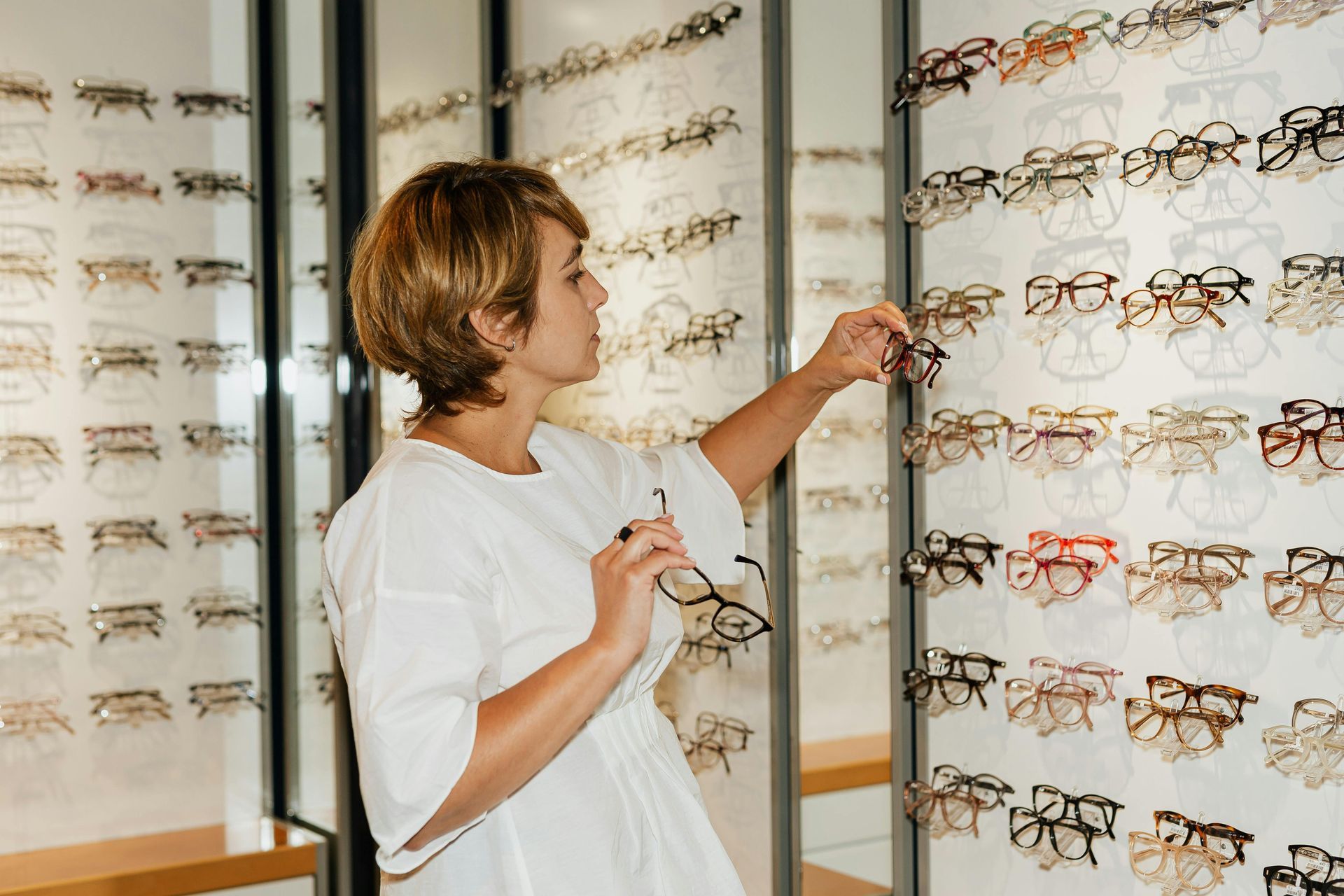
The best glasses frames fit your daily life first. Style matters, but comfort and visual clarity matter just as much. A pair of glasses may look fantastic under store lighting and still become frustrating after a few hours at work. That usually happens when people choose frames based only on appearance. So, make sure you consider the following factors when choosing the right frame for you.
Start With How You Actually Use Your Glasses
Someone who wears glasses for 12 hours a day needs different frames from someone who only uses reading glasses at home.
For example, office workers often spend hours looking at screens under bright lighting. Heavy frames can create pressure around the nose and temples during long workdays. Anti-reflective coatings can also reduce glare from monitors and overhead lights.
So, make sure that you think about how you use your glasses in your daily routine.
Remember Your Prescription Requirements
Many people do not realise that their prescription affects which frames will feel and function best for them. Strong prescriptions often create thicker lens edges, especially in oversized frames. On the other hand, smaller frames usually help reduce edge thickness because the lens requires less material around the outside.
Progressive and multifocal lenses also require sufficient vertical lens depth to function properly. And if you use very shallow fashion frames, they can make reading zones feel uncomfortable.
Therefore, you must take a close look at your prescription before buying a pair of glasses.
Don’t Forget to Consider Your Comfort
Comfort should be your top priority when selecting between different frames. A good pair of glasses should feel stable and natural after a few minutes of wear.
If you choose a poorly fitted frame by chance, it may cause the following inconveniences:
- Pressure behind the ears
- Red marks on the nose
- Headaches
- Slipping during conversations
- Cheek rubbing when smiling
When glasses slide down constantly, the lens positioning shifts too. That movement can strain your eyes throughout the day because your pupils no longer sit in the correct optical centre of the lenses.
How to Know What Glasses Look Good on You
When you're wondering, "What type of frames should I get?" you often have another question: “How do I know a frame is the right fit for me?” The rule of thumb in this regard is that the glasses should balance your facial features and feel natural with your personal style. To ensure that, here is what you need to keep in mind:

Identify Your Face Shape
The way your face actually looks matters a lot in determining the right frame for you. Here is a general guide in this regard:
- Structured frames that add definition often suit softer, round faces.
- Curved frames can soften strong facial lines on angular faces.
- Oval faces tend to work well with a wide variety of frame styles.
- For heart-shaped faces, lighter lower-frame designs often create better balance.
Still, proportions matter more than labels.
For example, someone may technically have a round face but still suit softer round frames because of their nose bridge, eyebrow shape, or personal style.
Consider Your Skin Tone, Hair Colour and Personal Style
The colour of your frames can make your glasses stand out more or blend in naturally.
Tortoiseshell frames remain popular because they work with many skin tones and feel softer than solid black frames. On the other hand, transparent or translucent frames create a lighter appearance that many people prefer for daily office wear.
Darker frames often create more definition and contrast. That works well for people who want their glasses to stand out more intentionally.
If you wear glasses every day, choose a style that fits your actual wardrobe and routine. A bold fashion frame may feel exciting in-store but end up sitting in a drawer if it clashes with everything you wear.
How Should Glasses Fit Your Face Properly?
It's also important to understand how a glasses frame actually fits your face. Let’s walk through some essential considerations for the perfect fitting of glasses.
The Numbers on Glasses’ Frames
Most glasses include three numbers printed on the inside of the arm.
For example:
52-18-140
These numbers represent:
- 52mm lens width
- 18mm bridge width
- 140mm temple arm length
The bridge width affects how the glasses sit on your nose. Temple length affects how securely the glasses sit around your ears. So, if you want the frame to fit perfectly, you must know the exact lengths and widths. Even small measurement differences can create comfort and vision issues.
Signs Your Glasses Fit Correctly
Good-fitting glasses should:
- Sit evenly across your face.
- Keep your pupils centred in the lenses.
- Stay secure when you move.
- Avoid touching your cheeks.
- Feel balanced without pinching.
Your eyebrows should usually remain visible above or near the frame line rather than sitting awkwardly inside the lenses.
Signs Your Frame Is the Wrong Fit
Here is a clear breakdown of what happens when a frame doesn’t fit you and how you can resolve that particular issue:
| Problem |
Likely Cause |
Potential Solution |
| Glasses slide down |
Bridge too wide |
Narrower bridge |
| Red nose marks |
Excessive pressure |
Lighter frame |
| Headaches |
Poor lens alignment |
Fitting assessment |
| Frames cheeks |
Frame too deep or low |
Different frame shape |
| Glasses sideways |
Uneven arms or poor sizing |
Frame adjustment |
What Type of Frames Should You Get for Your Prescription?
Your prescription strength affects lens thickness, frame comfort, and visual performance. Let’s learn what type of glasses you should choose based on the prescribed lens requirements.
Best Frame Choices for Strong Prescriptions
Smaller frames usually work best for strong prescriptions because they reduce lens thickness around the edges. Full-rim frames also help conceal thicker lens edges better than rimless styles.
However, high-index or super-thin lenses can reduce weight and thickness further. A recent PubMed Central report explains that prescription accuracy and lens quality both play important roles in comfortable long-term vision.
Here is a quick comparison in this regard:
| Frame Type |
Best for |
Potential Drawback |
| Full-rim |
Strong prescription |
Slightly heavier appearance |
| Rimless |
Lightweight look |
Less ideal for thick lenses |
| Smaller Frames |
Reducing thickness |
Less oversized styling |
| Oversized Frames |
Fashion-forward styles |
Can increase lens thickness |
Choosing Frames for Multifocal or Progressive Lenses
Progressive lenses require sufficient vertical space for the distance, intermediate, and reading zones. And, if you go for very shallow frames, they can make the transitions feel compressed. People sometimes describe the experience as “searching” for the right viewing spot.
Frames with adequate depth usually provide smoother adaptation and more comfortable reading zones. So, make sure you choose glasses with enough lens space for clear vision at every distance.
Selecting Frames Based on Material Type
Frame material affects comfort more than many people expect. Titanium frames often feel lighter during long wear. In contrast, acetate frames provide durability and a wide range of colours and finishes.
People who wear glasses from morning until night usually notice weight differences quickly. Remember, if glasses leave deep marks or feel tiring after several hours, your frame weight or balance may need adjustment.
A Simple Checklist for Picking the Perfect Glasses
Now that you know what to consider before buying a perfect pair of glasses for you, let’s combine all the findings in a simple checklist. Here are the questions you need to ask yourself before making a purchase:
- Do these frames feel comfortable after several minutes?
- Does the frame suit my prescription strength?
- Will these glasses work for my daily routine?
- Do the lenses sit centred in front of my eyes?
- Do the frames slide when I smile or move?
- Could I comfortably wear these for eight hours?
- Does the frame style actually suit my wardrobe and lifestyle?
The Final Words
We hope that this guide has truly helped you learn how to pick the perfect glasses for you. The best glasses do more than look good in a mirror. They support a clear vision, feel comfortable during long days, and fit naturally into your life.
Good frame selection combines style, fit, prescription needs, and practical comfort. If you overlook any part, you often end up adjusting, slipping off, or avoiding their glasses altogether.
Professional guidance can make that process much easier, especially for strong prescriptions, multifocal lenses, or long-term daily wear.
At Nazarian Optometrists, we help you find the right glasses that feel comfortable from the start. Whether you need children’s frames, multifocals, or fast prescription dispensing, you can get 2 pairs of designer glasses for just A$199.
Book an eye examination or speak with the team to find glasses that genuinely suit your eyes, lifestyle, and daily routine.
FAQs
How do I know if my frames are too wide?
If the frame slides down, sits unevenly, or extends too far beyond the sides of your face, it’s not the right fit for you. Your pupils may also sit off-centre within the lenses, which can affect visual comfort.
What glass frames make lenses look thinner?
Smaller full-rim frames usually help minimise visible lens thickness. Also, high-index or super-thin lenses can reduce edge thickness for stronger prescriptions.
Are lightweight glasses better for everyday wear?
In fact, they are made for everyday wear. Lightweight glasses mean you won’t feel excessive pressure around your nose and ears. For best results, you can go for titanium and lighter acetate frames, as they commonly improve long-term comfort.
Can the wrong glasses frames cause headaches?
Wrong glasses can cause headaches because they create pressure points and incorrect lens positioning. Both issues may contribute to headaches, eye strain, and visual fatigue during long wear. So, make sure that your glasses fit you perfectly.
What glasses suit round faces best?
For round faces, structured or angular frames often feel ideal. Still, your personal style, frame size, and overall proportions matter more than rigid face-shape rules.
Is it better to buy glasses online or in person?
In-person fitting usually provides better comfort, prescription alignment, and personalised adjustments, especially for multifocals or strong prescriptions. So, you must physically visit an eye health centre near you, like Nazarian Optometrists, for the best results.