When you walk out of an eye clinic with a fresh glasses prescription, it often feels like you are holding a note written in secret code. Between the plus and minus signs, short abbreviations like SPH and CYL, and random numbers, it is totally normal to feel confused about what any of it actually means for your eyes.
At Nazarian Optometrists, one of the values patients ask about the most is the axis. People often wonder if a higher axis number means their eyesight is getting worse, or why their partner has an axis listed on their prescription while they do not.
In this guide, we will break down what the axis in eye prescription forms means and explain every other optical abbreviation on your sheet in easy-to-understand language.
Key Takeaways
- The axis value indicates the exact orientation of your astigmatism (when the cornea or lens has an uneven curve) correction and is measured on a scale from 1 to 180 degrees.
- A higher or lower axis number does not mean your vision is stronger or weaker; it simply points to the direction of the curve on your eye.
- Axis only appears on prescriptions for people who have astigmatism. If your eye is naturally shaped like a smooth sphere, this section will be blank.
- Understanding SPH, CYL, and AXIS together makes it much easier to read your entire prescription and know how your custom lenses are crafted.
What Is Axis in an Eye Prescription and Why Is It Important?
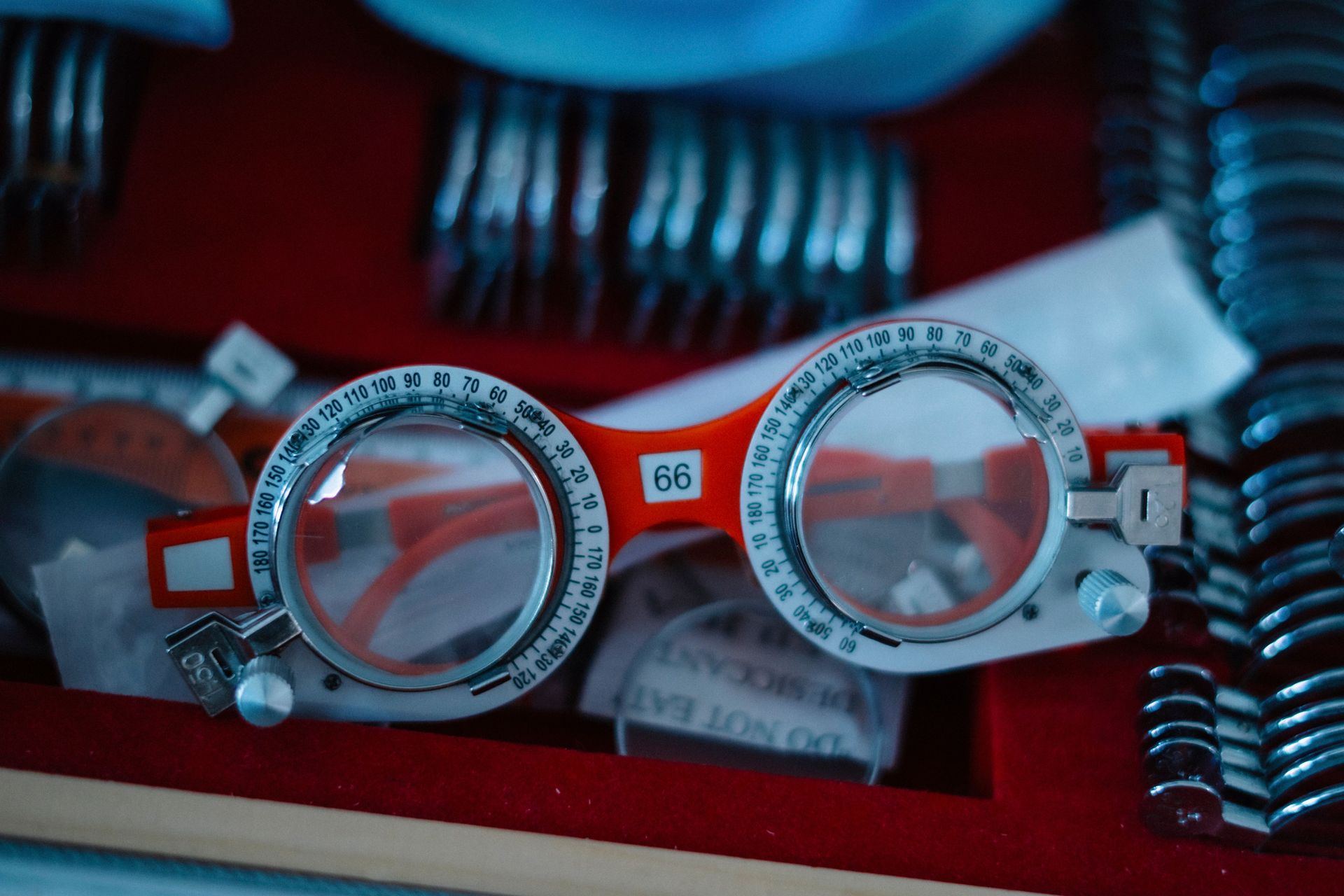
The axis in an eye prescription tells your optometrist the exact direction that astigmatism needs to be corrected.
Astigmatism itself is very common; in fact, data from UVA Health shows it affects about 1 in 3 people. It simply means the clear front surface of your eye (the cornea) or your internal lens isn't perfectly round like a basketball. Instead, it curves more like an oval football, where one side is steeper than the other.
Because of that uneven shape, light ends up scattering instead of landing cleanly on a single spot at the back of your eye. That is why things might look a bit smeared, doubled, or shadowed around the edges.
To correct this condition, your prescription relies on two numbers working side by side. The CYL (Cylinder) measures how much astigmatism needs smoothing out, while the AXIS runs on a scale from 1 to 180 degrees. It tells the lab technician the exact angle to set that correction.
In everyday terms, here is what those degree numbers mean:
- 180 degrees: The astigmatism correction is set horizontally across your eye.
- 90 degrees: The correction sits vertically, straight up and down.
- Any other number (like 15°, 45°, or 120°): The correction tilts on a diagonal slant somewhere in between.
Getting this angle right is essential when making your glasses. If the axis is off by even a few degrees, your sight will still feel distorted, even if the actual strength of the lens is spot on.
Understanding the Numbers and Abbreviations on Your Eye Prescription
When you look at your prescription card, you'll see a few three-letter optical abbreviations. If you've ever wondered what SPH, CYL, and axis are in an eye prescription, each column simply gives specific instructions to the optical lab on how to shape your custom lenses.
| Term | Meaning | Who Has It? |
|---|---|---|
| SPH | Nearsightedness or farsightedness power | Everyone needing vision correction |
| CYL | Amount of astigmatism | People with astigmatism |
| AXIS | Direction of astigmatism correction | People with astigmatism |
| ADD | Additional reading power | Multifocal and reading glass wearers |
| PD | Pupillary distance | Everyone getting glasses |
| OD | Right eye (Oculus Dexter) | Everyone |
| OS | Left eye (Oculus Sinister) | Everyone |
| OU | Both eyes (Oculus Uterque) | Sometimes used in general notes |
SPH (Sphere)
SPH stands for Sphere. This number shows the main strength your eyes need to focus clearly on things near or far.
It is measured in diopters. A minus sign (-) means you are nearsighted, while a plus sign (+) means you are farsighted.
The further that number sits from zero, the thicker or stronger your lenses need to be.
CYL (Cylinder)
CYL is short for Cylinder, and it shows the extra corrective power needed to smooth out astigmatism. If this spot on your card is blank or has a simple dash, your eyes are naturally round like a sphere, so you don't need astigmatism correction.
In modern optometry, CYL numbers almost always come with a minus sign.
ADD
ADD stands for "Addition." If you need help seeing both far away and up close, your eyes require two different powers. Rather than writing a separate prescription for reading glasses, your optometrist uses ADD to tell the lab how much extra magnifying power to add onto your baseline distance prescription.
That way, a single pair of progressive or bifocal glasses lets you switch effortlessly between seeing across the room and reading your phone.
ADD is almost always a positive number (like +1.75 or +2.25) and is usually the same for both eyes.
PD (Pupillary Distance)
PD measures the exact distance in millimetres between the centres of your two pupils. It tells exactly where to centre the strength of your lenses so it sits right in front of your eyes.
If your PD is off by even a little bit, your eyes have to work extra hard to focus, which can cause headaches or eye strain.
Note: If you frequently deal with deep pressure or aching around your eyes, explore our guide on pain behind the eye causes and treatments to learn what else might be triggering it.
OD, OS, and OU
Most people don't have identical eyes. Your right eye might need a totally different strength or angle than your left eye. Because eye doctors used Latin for centuries, they stick with these quick labels so every optical lab in the world knows instantly which set of numbers belongs to which side of your face:
OD: Your right eye numbers.
OS: Your left eye numbers.
OU: Used when both eyes have the exact same numbers, so the doctor doesn't have to write everything twice.
How Is Axis Measured During an Eye Test?
Finding your exact axis degree involves advanced digital measurements followed by detailed refinement from an experienced optometrist. At Nazarian Optometrists, this process combines modern diagnostic technology with personalised clinical assessment.
Here is how your eye doctor finds it:
Initial Vision Screening
First, your eye doctor checks your current vision and asks you about any everyday issues you've been having, like blurry edges, double vision, or annoying night glare from headlights while driving.
Autorefractor Measurements
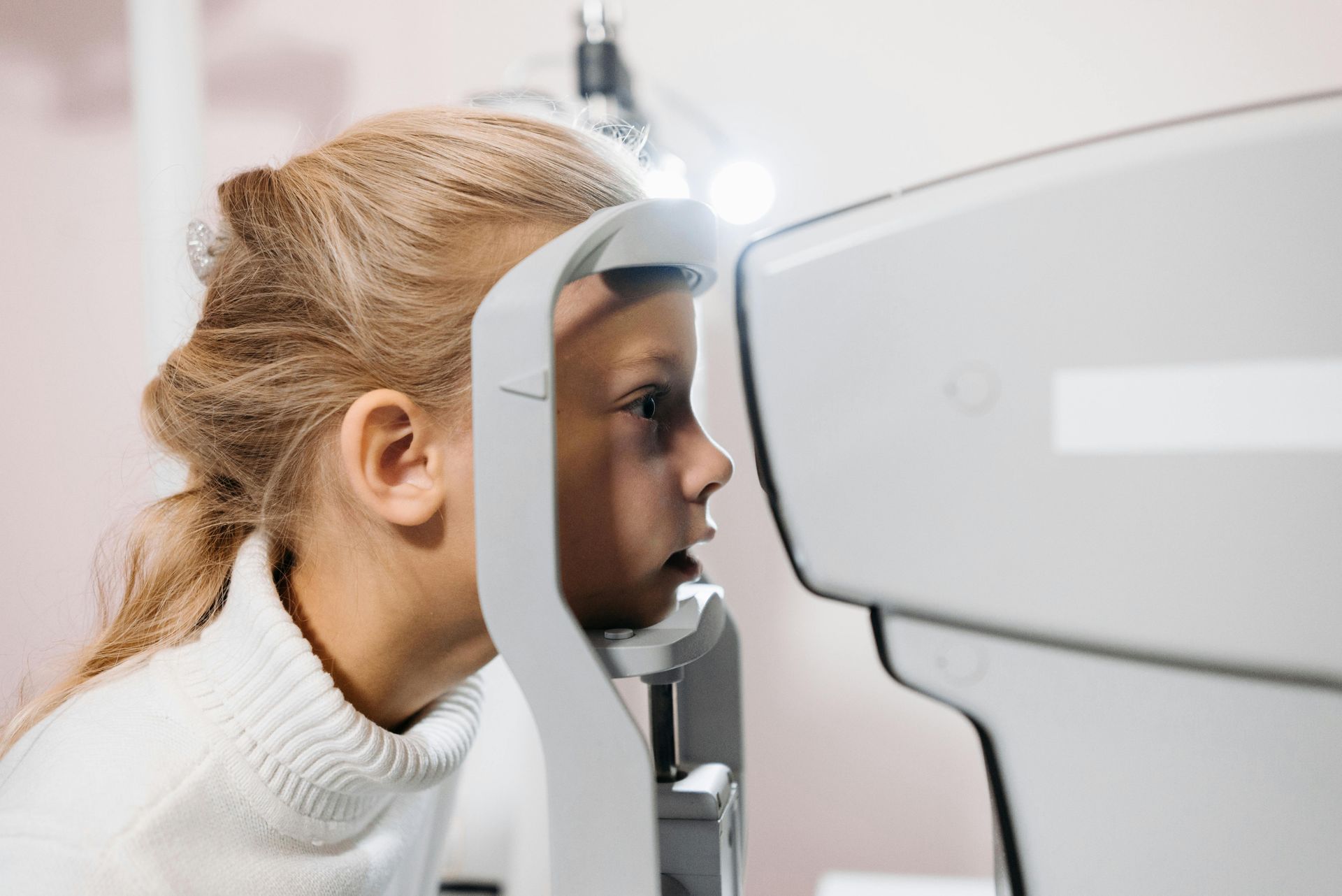
Next, you look into an autorefractor (that machine where you stare at a tiny image of a hot air balloon). It shines a gentle beam into your eye to measure the reflection and gives your doctor an instant digital readout of your estimated SPH, CYL, and AXIS numbers.
Lens Refinement
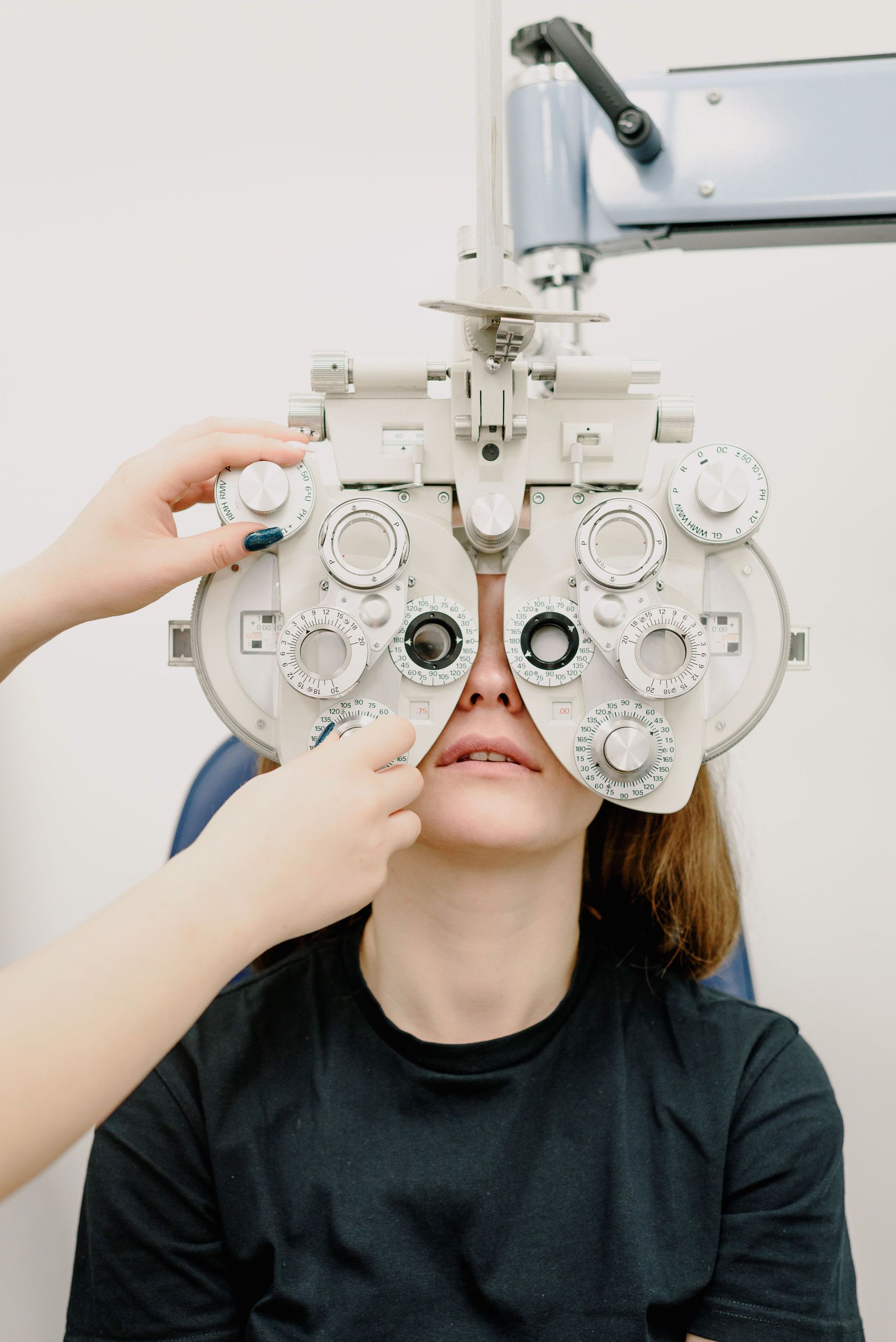
In the next step, the doctor uses that large eye-testing machine filled with lenses (a phoropter) to fine-tune your starting estimates.
As they flip between slightly different angles, they will ask: "Which looks clearer, option 1 or option 2?"
Your answers right here help lock in the exact degree that gives you the sharpest vision.
Final Prescription Confirmation
When you get the clearest settings for each eye separately, the doctor checks your binocular balance. They use a quick prism test to split the eye chart into two images and keep on adjusting the lenses until both lines look equally sharp.
After that, they record your official prescription numbers so your custom lenses can be made.
Note:
Once you have your numbers locked in, check out our guide to finding the perfect pair of glasses to pick the right frames for your lifestyle.
Can Your Axis Change Over Time?
Yes, it’s completely normal for your axis to change as you get older. Simple things like natural changes in your cornea or even light pressure from your eyelids can tilt that angle by a few degrees.
A small adjustment like moving from 170° to 175° is just a routine tweak during an eye test.
But if your axis shifts suddenly or by a large amount, your doctor will want to check for things like corneal issues or old injuries.
To catch these subtle changes before they cause eye strain, we recommend booking a checkup every 1 to 2 years.
What Happens If Your Glasses Have the Wrong Axis?
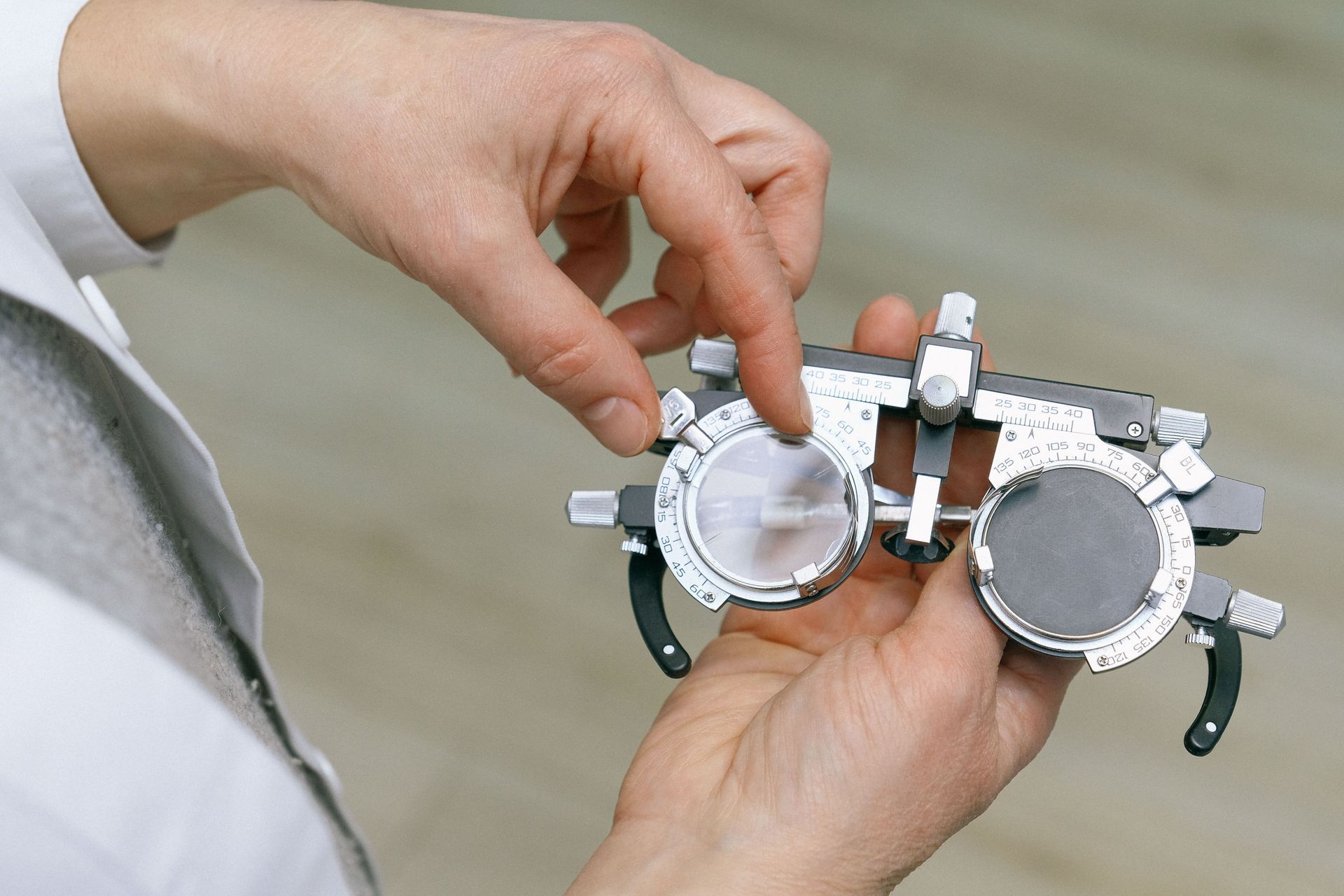
When glasses are made with an off-centre axis, even by just 5 or 10 degrees, your eyes will let you know pretty quickly that something is off. Common signs include:
- Blurred or double vision (if you suspect another underlying issue, explore our guide on 18 common causes of sudden blurry vision to see what else might be going on)
- Distorted, tilted, or curved perspectives
- Eye strain and fatigue
- Dull headaches around your brow or temples
- Dizziness or trouble adapting to new lenses
To make clear how much of an impact an off-axis lens makes in real life, let us share a recent case at our clinic.
A patient came to our clinic suffering from daily headaches and slanted vision after wearing a new pair of glasses bought online. When our team tested the lenses on our lab lensmeter, we found that while the strength numbers were accurate, the left lens axis was off by 12 degrees.
Once we remade the lenses with their true axis setting, their headaches disappeared, and their vision went back to feeling completely natural.
Conclusion
Reading your prescription shouldn't feel like you are trying to crack a secret code. That axis number is simply a directional guide that tells the exact angle to set your lenses so you aren't stuck squinting at road signs or dealing with screen glare.
A few degrees really do make all the difference in how comfortable your glasses feel throughout the day.
Regular eye examinations help ensure your prescription stays accurate while allowing your optometrist to monitor your long-term eye health. At
Nazarian Optometrists,
advanced diagnostic technology and decades of clinical experience help detect changes early, giving you confidence that your vision receives the care it deserves.
Frequently Asked Questions
Is 180 axis in an eye prescription normal?
Yes, an axis of 180 degrees is completely normal. It simply means that your astigmatism lies along a horizontal plane. Axis values anywhere between 1 and 180 degrees are routine, and no single angle is better or worse than another.
Why does my prescription have an axis value but someone else's does not?
An axis value only appears on prescriptions for individuals who have astigmatism (indicated by a number in the CYL column). If someone does not have astigmatism, they only require a basic SPH correction and do not need an axis coordinate.
Is a higher axis number worse?
No, a higher axis number is not worse. Unlike SPH or CYL, where higher numbers indicate stronger prescriptions, the axis value is a directional angle measured on a protractor scale from 1 to 180 degrees. An axis of 170 is not "stronger" or "weaker" than an axis of 10.